Your Portfolio Returns Have a Currency Problem (And How to Fix It)
A Quick Guide to Managing FX Risk in Investment Portfolios
For funds investing across borders, currency risk is not a secondary factor — it is embedded in portfolio performance.
Every foreign investment introduces two layers of return:
- the underlying asset performance
- the currency movement
Yet in many portfolios, FX exposure is treated as background noise , until volatility turns it into a visible drag on returns, investor reporting, and decision-making.
.png)
What Is Currency Risk in Investment Portfolios?
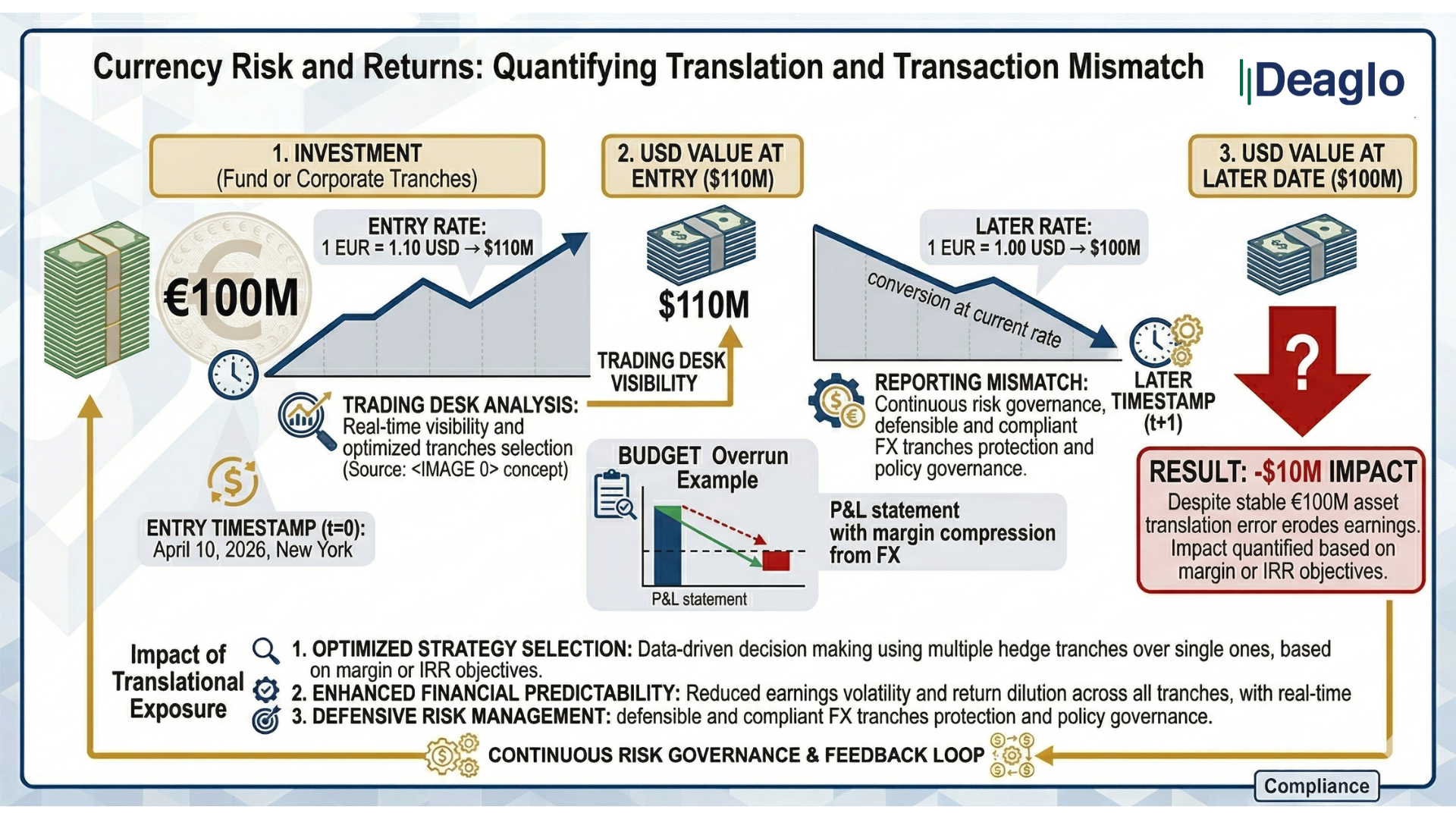
Currency risk (foreign exchange risk) is the impact of exchange rate movements on the value of investments denominated in foreign currencies. A portfolio company may perform well in local terms, but if the currency weakens against the fund’s base currency, reported returns decline when converted.
Key takeaway: Portfolio performance is not the same as realized returns after FX conversion.
Why FX Risk Becomes a Problem for Funds
FX risk becomes most visible when funds need to explain performance with clarity and confidence.
- It distorts reported returns - Currency movements can amplify or reduce returns independently of asset performance.
- It weakens LP communication - Investors expect clear attribution of what is driving performance — including FX.
- It complicates capital raising - Unhedged exposure introduces variability into track records.
- It creates missed opportunities - Favorable exchange rates are often not locked in at key investment moments.
Where Most Funds Fall Short
Across private equity, venture capital, and private credit, the pattern is consistent:
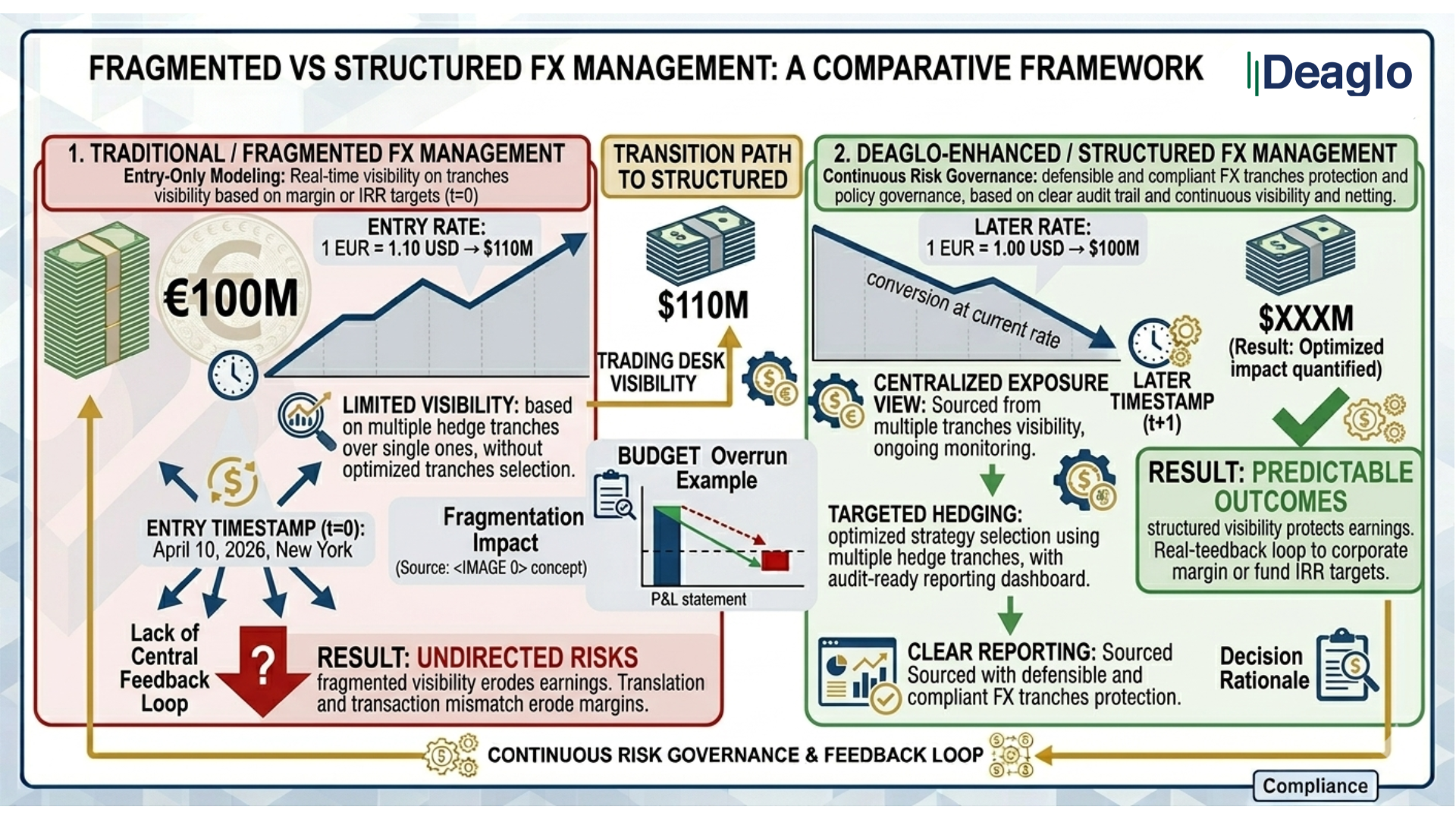
- FX exposure is modeled at entry but not actively managed during hold
- hedging is reactive instead of strategy-driven
- reporting lacks transparency on currency impact
- portfolio-level exposure is not centralized
The challenge is not awareness, it is execution.
How to Manage Currency Risk in a Portfolio
A structured approach to FX risk management transforms currency from a source of uncertainty into a controllable variable.
1. Centralized Exposure Visibility
Track FX exposure across all investments, currencies, and entities in one place.
2. Scenario Analysis
Model how currency movements impact:
- IRR
- cash flows
- exit outcomes
3. Targeted Hedging Strategies
Use tools such as:
- forward contracts
- currency options
- natural hedging
4. Transparent Reporting
Provide LPs with:
- FX attribution
- hedged vs unhedged views
- forward-looking exposure insights
Goal: Make FX measurable, explainable, and controlled.
.png)
From Passive Exposure to Active Management
Leading funds are shifting from:
- reactive → proactive
- fragmented → centralized
- unclear → transparent
Currency risk is no longer treated as an afterthought. It is becoming a core component of portfolio strategy and investor communication.
Final Thought
Currency risk is not just a market variable — it is a portfolio variable.
Funds that actively manage FX exposure gain:
- more stable returns
- clearer LP communication
- stronger control over performance outcomes
See how funds are quantifying and managing FX exposure.