Transactional Exposure: Understanding FX Exposure in Cash Flows
In global finance, transactional exposure is one of the most immediate and measurable forms of FX exposure. It arises from contractual cash flows denominated in foreign currencies and directly impacts cash flow, profitability, and financial performance.
For corporates and investment funds operating across borders, managing transactional exposure is a critical component of effective FX risk management.
.png)
How Transactional Exposure Fits Within FX Exposure
Transactional exposure is one of the three main types of foreign currency exposure, alongside:
- Translation exposure (accounting impact)
- Economic exposure (long-term strategic impact)
Unlike other types, transactional exposure directly affects realized cash flow and earnings.
Transactional Exposure in Corporates
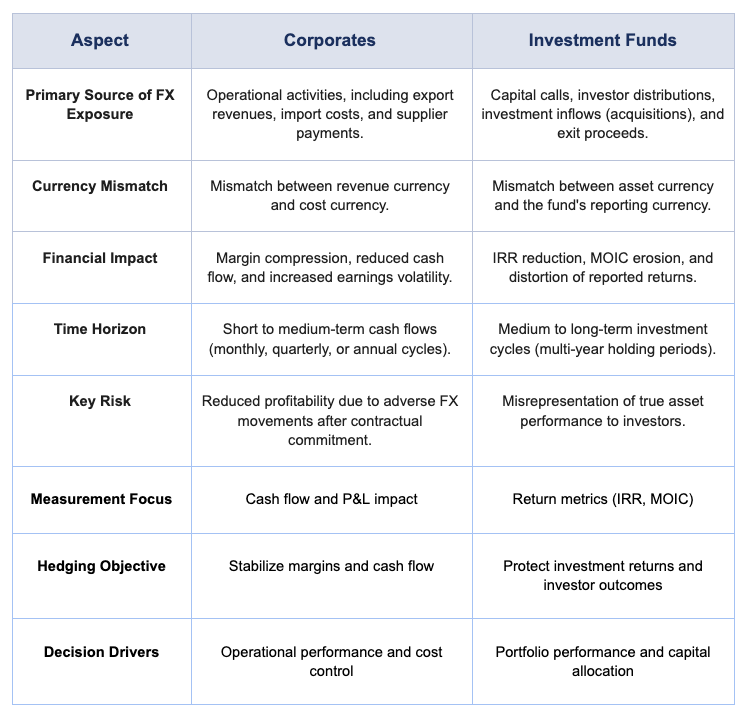
Corporates face transactional exposure, a key component of FX exposure (foreign currency exposure), when revenues, costs, or financial obligations are denominated in different currencies. This form of currency risk exposure directly impacts cash flow and profitability.
Common Sources of Transactional FX Exposure
Corporates typically experience transactional FX exposure through:
- Export revenues in foreign currencies
- Import costs and supplier payments
- Foreign currency debt repayments
- Intercompany transactions across entities
Corporate Example of Transactional Exposure
A US-based company sells goods in Europe:
- Revenue is generated in EUR
- Costs are incurred in USD
If the EUR weakens against the USD:
- The value of revenue decreases when converted into USD
- Profit margins are compressed despite stable sales volumes
Transactional exposure leads to a direct reduction in cash flow and profitability, increasing earnings volatility.
Transactional Exposure in Investment Funds
Investment funds face transactional exposure, a key component of FX exposure (foreign currency exposure), when cash inflows and outflows occur in different currencies. This form of currency risk exposure directly impacts realized returns, cash distributions, and overall fund performance.
Common Sources of Transactional FX Exposure
Investment funds typically experience transactional FX exposure through:
- Capital calls and investor contributions in different currencies
- Investment inflows and exit proceeds in foreign currencies
- Portfolio-level cash flows across geographies
- Currency mismatches between asset returns and reporting currency
Investment Fund Example of Transactional Exposure
A private equity fund invests in a Brazilian asset:
- Investment returns are generated in BRL
- Reporting currency is USD
If the BRL depreciates against the USD:
- The value of returns decreases when converted into USD
- Internal Rate of Return (IRR) declines despite strong asset performance
Transactional exposure reduces realized returns and can distort investment performance metrics.
Comparison of Transactional FX Exposure
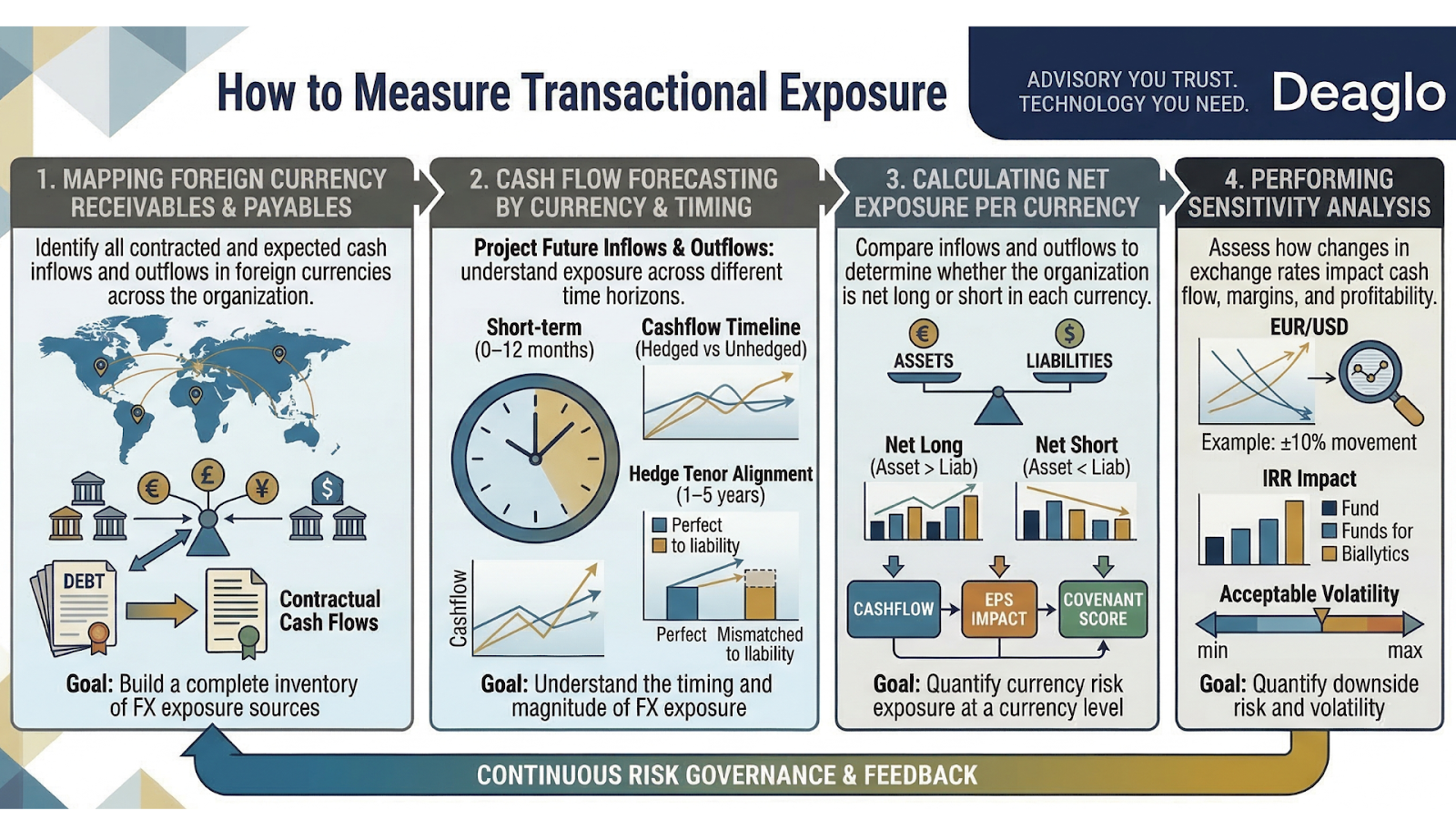
How to Measure Transactional Exposure
Measuring transactional exposure is a core step in managing FX exposure (foreign currency exposure). It involves identifying and quantifying all foreign currency cash flows and analyzing how exchange rate movements impact financial outcomes.
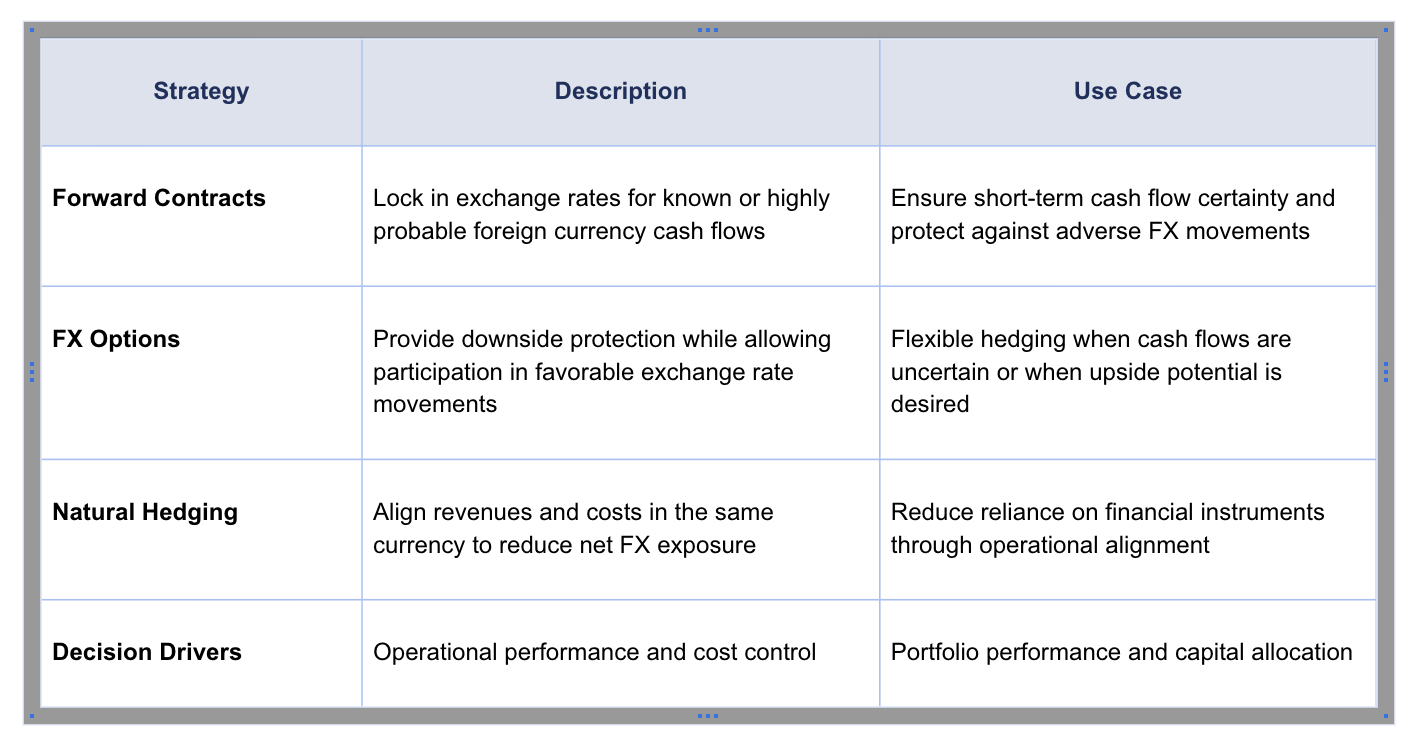
How to Manage Transactional Exposure
Effective management of transactional FX exposure involves aligning hedging strategies with cash flow timing and earnings volatility while improving financial predictability and decision-making.
Challenges in Managing Transactional Exposure
Managing transactional exposure remains a key challenge within broader FX exposure (foreign currency exposure), particularly for organizations operating across multiple currencies and entities.
Common Challenges
Organizations often struggle with:
- Lack of real-time visibility into FX exposure
- Fragmented data across entities and systems
- Manual processes relying on spreadsheets
These limitations result in:
- Delayed hedging decisions and missed market opportunities
- Increased operational risk due to errors and inconsistencies
- Inefficient FX risk management with limited strategic control
The Role of Technology in Managing Transactional Exposure
Modern platforms play a critical role in transforming how organizations manage transactional FX exposure by providing centralized, real-time, and data-driven insights.
Platforms like Deaglo Intelligence enable:
- Real-time visibility of transactional FX exposure across entities and currencies
- Automated cash flow aggregation to eliminate manual processes
- Scenario analysis to evaluate hedging strategies under different market conditions
- Hedged vs unhedged comparisons to support data-driven decisions
Best Practices for Managing Transactional Exposure
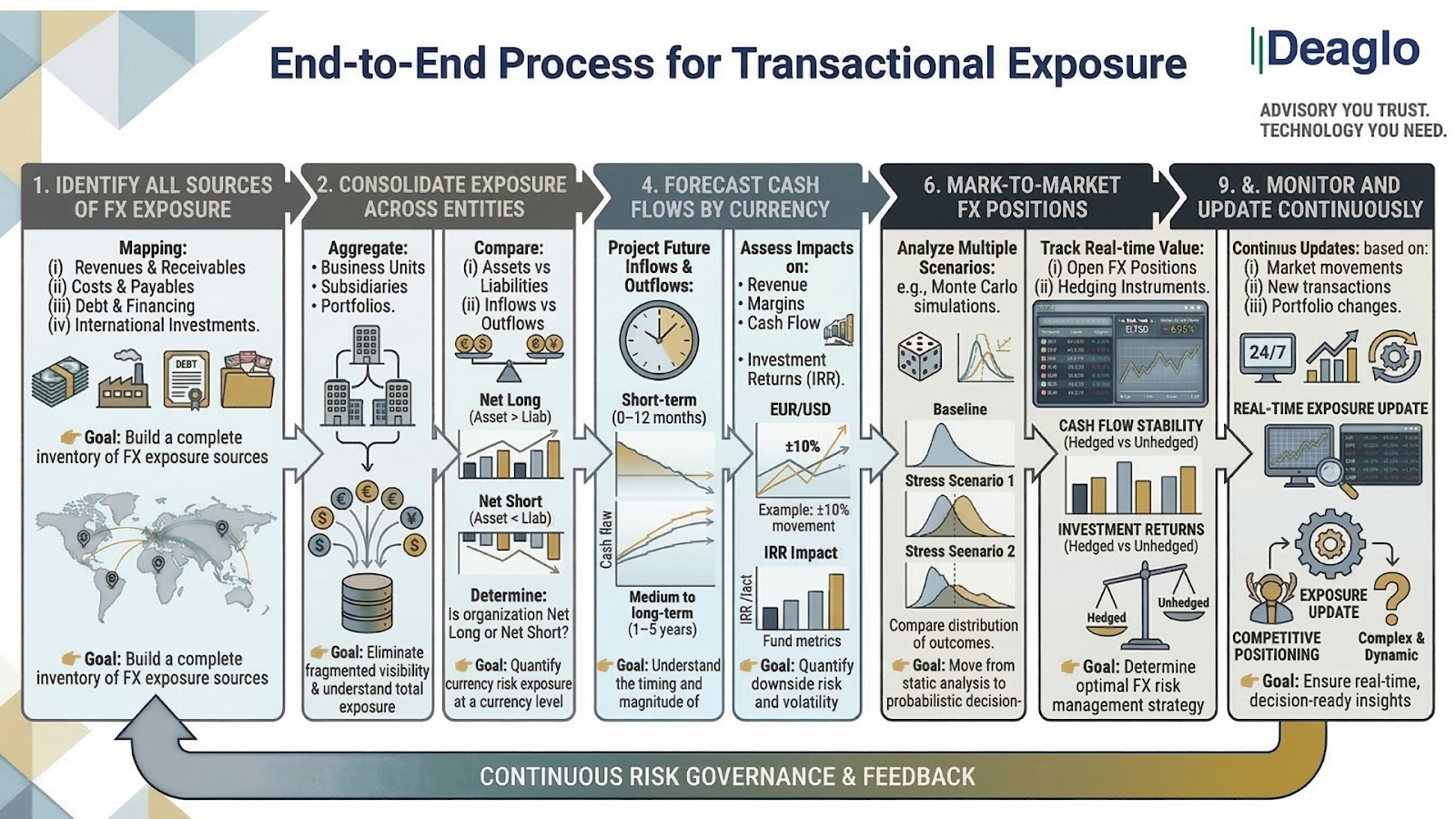
Managing transactional exposure involves a structured process of identifying foreign currency cash flows, forecasting their timing, calculating net exposure by currency, and analyzing the impact of exchange rate movements to support effective hedging decisions.
Key Takeaways
Transactional exposure is a type of FX exposure linked to foreign currency cash flows
- It directly impacts cash flow, profitability, and investment returns
- Both corporates and funds are exposed to transactional FX risk
- Effective management requires forecasting, hedging, and real-time visibility
Conclusion
Transactional exposure is one of the most tangible and immediate forms of FX exposure, making it a priority for both corporates and investment funds.
Organizations that actively manage transactional exposure can stabilize financial outcomes and improve decision-making. Those that do not risk allowing currency volatility to directly impact performance.
Control Your Transactional FX Exposure. Deaglo Intelligence provides real-time visibility, scenario modeling, and hedging insights, so you can manage transactional exposure with precision. Request a Demo.